
2025-2026 Crypto Guide: Top 10 Bitcoin & Altcoin Investments
Categories: Crypto Trading
Tags: Top 10 Cryptocurrencies
Publish date: 2025-9-24
Top 10 Cryptocurrencies to Watch in 2025-2026 : A Complete Investor's Guide
The cryptocurrency landscape is evolving at a breathtaking pace. What began with Bitcoin over a decade ago has exploded into a vast digital ecosystem of thousands of assets, each vying for relevance and value. For new and experienced investors alike, navigating this dynamic market can be daunting.
This comprehensive guide cuts through the noise to bring you the top 10 cryptocurrency by market capitalization—a key metric that reflects the total market value of a crypto asset. Understanding these leaders is crucial for anyone looking to understand the trends, technology, and potential of the digital finance revolution. This article will delving into the top 10 cryptocurrency's unique features, market trends, and potential investment opportunities. Readers will gain valuable insights into the underlying technology, historical performance, and future prospects of each cryptocurrency, equipping them with the knowledge needed to make informed investment decisions. With a balanced perspective that caters to both novice and seasoned investors, this comprehensive guide serves as a vital resource in navigating the dynamic world of digital currencies.
Table of Contents
Understanding Cryptocurrency and Market Cap
What is Cryptocurrency?
Why Market Cap Matters
The Top 10 Cryptocurrencies: Powering the Future of Finance
1. Bitcoin (BTC)
2. Ethereum (ETH)
3. XRP (XRP)
Key Note:
4. Tether (USDT)
5. BNB (BNB)
6. Solana (SOL)
7. USD Coin (USDC)
8. Dogecoin (DOGE)
9. TRON (TRX)
10. Cardano (ADA)
How to Invest in Cryptocurrency
Conclusion: Informed Investing is Key
Frequently Asked Questions (FAQ)
Understanding Cryptocurrency and Market Cap
What is Cryptocurrency?
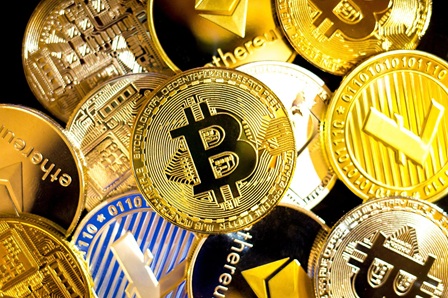
Cryptocurrency is a form of digital asset that utilizes cryptography for secure financial transactions. Unlike traditional currencies, cryptocurrencies use decentralized networks based on blockchain technology. This technology ensures transparency, security, and immutability of transaction records, making it a revolutionary advancement in the financial landscape.
The importance of decentralization in digital currencies cannot be overstated. By eliminating the need for intermediaries, cryptocurrencies empower users with greater control over their finances and reduce the risks associated with centralized banking systems. This shift towards a decentralized financial ecosystem is particularly significant in an affluent society where individuals seek more autonomy over their wealth.
Why Market Cap Matters
Before we dive in, it's essential to know why we use market cap for ranking. Unlike price alone, which only tells you the cost of a single coin, market capitalization (calculated as Current Price x Circulating Supply) gives you a clearer picture of a project's overall size, stability, and dominance in the market. A higher market cap generally indicates a more established and less volatile asset. Understanding market cap is vital for assessing the relative stability and growth potential of a cryptocurrency. Larger market caps often correlate with greater liquidity and lower volatility, making them more attractive for long-term investors. Conversely, smaller market caps may present higher risk but also the possibility for substantial gains, especially if the project gains widespread adoption. As we explore the top 10 cryptocurrencies, keep in mind that market cap is just one of many factors to consider when evaluating investment opportunities in this rapidly changing landscape.
The Top 10 Cryptocurrencies: Powering the Future of Finance
1. Bitcoin (BTC)
- Market Cap: $2.2 Trillion
Among the top 10 cryptocurrency, Bitcoin, the first and most well-known cryptocurrency, created by the anonymous Satoshi Nakamoto, remains the undisputed king. Bitcoin operates on a proof-of-work consensus mechanism and functions as a decentralized digital currency, free from central bank control. Its primary value proposition is as "digital gold"—a scarce, secure, and durable store of value. With a fixed supply of 21 million coins, its scarcity is a key driver of its long-term valuation, making it a cornerstone of the cryptocurrency market with the largest market capitalization. For any crypto portfolio, BTC is considered the foundational, blue-chip asset. Future prospects for Bitcoin are promising, as it is the gold in cryptocurrency and a hedge against inflation. Investors should consider its volatility and market dynamics when evaluating its investment potential.
Key Note:
- The foundational "digital gold" of crypto. Considered a primary store of value and a hedge against inflation. It's the blue-chip asset for any long-term portfolio.
- High energy consumption from Proof-of-Work mining leads to environmental concerns. Price remains highly volatile despite its relative maturity.
2. Ethereum (ETH)
- Market Cap: $529 Billion
If Bitcoin is digital gold, Ethereum is the digital economy. Its historical performance has shown substantial growth, with a market capitalization that consistently ranks among top 10 cryptocurrency. It’s a programmable blockchain that serves as the foundation for decentralized applications (dApps), smart contracts, and entire ecosystems. The majority of NFTs, DeFi (Decentralized Finance) protocols, and play-to-earn games are built on its network. Its recent transition to a proof-of-stake consensus mechanism ("The Merge") made it vastly more energy-efficient and set the stage for future scalability upgrades, cementing its position as the leading platform for Web3 innovation. Future developments, including Ethereum 2.0, aim to enhance scalability and sustainability, presenting numerous investment opportunities for those interested in the evolving landscape of decentralized finance.
Key Note:
- The leading programmable blockchain. Its value is tied to the growth of the entire Web3 ecosystem, including DeFi, NFTs, and dApps. The transition to Proof-of-Stake makes it more sustainable.
- Faces intense competition from other smart contract platforms like Solana and Cardano. High "gas fees" during network congestion can hinder usability.
3. XRP (XRP)
- Market Cap: $170 Billion
Created by Ripple Labs, XRP is designed for a specific purpose: facilitating fast, cheap, and scalable cross-border payments for financial institutions. It aims to replace legacy systems like SWIFT, which can be slow and expensive. Its historical performance has been influenced by regulatory challenges, particularly in the United States. Despite regulatory challenges, XRP's fast transaction speeds and low costs continue to attract institutional interest. Its widespread adoption by financial entities underscores its strategic importance in the evolving landscape of blockchain-based payments. The future outlook for Ripple depends on the resolution of ongoing legal issues and its ability to expand its network of partnerships, which could enhance its market position. As the market matures, XRP remains a noteworthy asset with the potential to significantly impact cross-border financial operations.
Key Note:
- A bet on the modernization of global cross-border payments. Its low cost and speed are attractive to financial institutions seeking an alternative to SWIFT.
- Heavily dependent on the outcome of ongoing legal battles with regulators.
4. Tether (USDT)
- Market Cap: $168 Billion
Tether is the most prominent stablecoin. Unlike other cryptocurrencies, its value is pegged 1:1 to the US dollar, meaning it’s designed to maintain a stable value of $1.00. It acts as a vital bridge between traditional fiat currency and the crypto world, allowing traders to move in and out of volatile positions without leaving the blockchain ecosystem. While its reserves have been a topic of scrutiny, its sheer volume and utility make it a permanent fixture in the top ranks. Compared to USDC, USDT has larger market capitalization and broader adoption across multiple cryptocurrency exchanges, offering higher liquidity and accessibility.
Key Note:
- Not for investment growth. It is a vital trading tool for preserving value and moving between volatile crypto positions without cashing out to fiat.
- Persistent concerns and regulatory scrutiny over the transparency and adequacy of its U.S. dollar reserves.
5. BNB (BNB)
- Market Cap: $118 Billion
Binance Coin serves as the native cryptocurrency of the Binance cryptocurrency exchange, one of the largest digital asset exchanges (DAX) globally. It now powers the entire BNB Chain ecosystem, a popular blockchain for dApps and smart contracts. Users can pay for transaction fees on the chain and on the Binance exchange at a discount using BNB. Its utility and the success of the Binance platform have driven its adoption, making it a titan of the exchange-based token model. Its unique role within the Binance ecosystem allows users to enjoy reduced trading fees and access various services. Historically, BNB has shown impressive growth, and its market capitalization reflects its utility and adoption. Future growth potential is linked to Binance's expansion and the increasing demand for cryptocurrencies.
Key Note:
- A bet on the continued dominance and growth of the Binance ecosystem. Its utility for paying fees and powering the BNB Chain provides inherent demand.
- Heavily centralized and tied to the success and regulatory standing of a single company (Binance). Any legal issues for Binance directly impact BNB's value.
6. Solana (SOL)
- Market Cap: $114 Billion
Solana has carved out a reputation as one of the fastest blockchains in existence, boasting incredibly high throughput and low transaction costs. It was designed to host scalable, user-friendly dApps and has become a major hub for NFTs and decentralized trading. While it has faced network outage challenges, its cutting-edge technology and passionate developer community keep it at the forefront of the "Ethereum competitor" conversation. Its historical performance has been impressive, with a rapidly growing market capitalization. Future developments focus on enhancing its ecosystem, though potential risks include competition from other blockchain platforms and market volatility.
Key Note:
- A high-throughput blockchain designed for scalability. It has become a major hub for consumer-grade dApps, NFTs, and decentralized trading due to its low fees and speed.
- A history of network outages and downtime questions its reliability and decentralization compared to rivals.
7. USD Coin (USDC)
- Market Cap: $72 Billion
USD Coin is another major stablecoin pegged to the US dollar. It was founded by the Centre Consortium, a partnership between Circle and Coinbase. USDC is often praised for its transparency and regulatory compliance, regularly publishing audited reports on its fully-backed reserves. For investors seeking a trusted and compliant stablecoin, USDC is a premier choice. Its stability and transparency have made USDC a preferred option for institutional investors and decentralized finance applications, facilitating seamless transactions across various platforms. The ongoing emphasis on regulatory compliance and reserve audits enhances its credibility and trustworthiness within the cryptocurrency community. As the ecosystem continues to evolve, stablecoins like USDC are expected to play an increasingly vital role in bridging traditional finance with blockchain-based solutions, supporting the growth of decentralized financial services and digital asset management.
Key Note:
- The preferred regulated and transparent stablecoin for institutional investors. Its full backing by cash and short-dated U.S. Treasuries makes it a trusted safe haven.
- As a centralized stablecoin, it faces potential regulatory challenges that could impact its issuance or redemption.
8. Dogecoin (DOGE)
- Market Cap: $32 Billion
Originally created as a meme, Dogecoin has gained a significant following and community-driven growth. Dogecoin’s value is driven almost entirely by its massive, dedicated community and influential supporters like Elon Musk. While it lacks the complex smart contract capabilities of other chains, its simplicity, low fees, and "friendly" branding have earned it a surprising number of real-world use cases as a tipping currency and means of payment for some merchants. Future prospects for Dogecoin remain uncertain, as its value is heavily influenced by market sentiment and community engagement.
Key Note:
- A purely speculative asset driven by a powerful community and celebrity endorsements. Its low fees have found niche use cases for tipping and payments.
- Lacks fundamental utility or a development roadmap. Its value is extremely vulnerable to social media sentiment and hype cycles.
9. TRON (TRX)
- Market Cap: $32 Billion
TRON (TRX) is a blockchain platform focused on creating a decentralized internet specifically focused on the entertainment ecosystem (like video, music, and gaming). It utilizes a delegated proof-of-stake (DPoS) consensus mechanism, which allows for high throughput and fast transaction speeds. Its goal is to allow creators to publish content and get paid directly from their audience, without middlemen like YouTube or Spotify. The TRON network is fast and transactions cost almost nothing. This makes it practical for small, frequent payments—a key requirement for an entertainment-based economy. It already has a large number of active applications (dApps), particularly in gaming and decentralized finance (DeFi). This shows real-world usage, not just theoretical potential. As the platform matures, TRON’s focus on decentralizing content distribution and fostering innovative dApps may lead to broader adoption across various sectors. Overall, TRON’s strategic initiatives and expanding ecosystem suggest a promising trajectory within the rapidly evolving blockchain industry.
Key Note:
- A platform focused on decentralized content sharing and entertainment, offering high throughput and low-cost transactions for dApps.
- Faces criticism over centralization due to its Delegated Proof-of-Stake model. Heavily competitive space with limited unique technical advantages.
10. Cardano (ADA)
- Market Cap: $29 Billion
Cardano is distinguished by its proof-of-stake consensus mechanism called Ouroboros, which aims to provide a more energy-efficient alternative to traditional mining. Founded by Ethereum co-founder Charles Hoskinson, it is built on a scientific foundation with a strong focus on security, sustainability, and scalability for smart contracts and decentralized applications (dApps). Its historical performance has been marked by steady growth, and its market capitalization has positioned it among the top 10 cryptocurrencies. Its development is based on peer-reviewed academic research, aiming to improve upon earlier blockchain technologies like Bitcoin and Ethereum. The platform's commitment to academic rigor and peer-reviewed research aims to mitigate security vulnerabilities and foster trust among enterprise users. As the ecosystem expands, partnerships with academic institutions and industry stakeholders are expected to drive innovative use cases. Ultimately, Cardano's focus on sustainability and scientific rigor positions it as a promising contender in the quest for a secure and scalable blockchain infrastructure. The future roadmap for Cardano includes the implementation of smart contracts and partnerships that could enhance its usability, making it an attractive option for investors.
Key Note:
- A "slow and steady" project focused on peer-reviewed research, security, and sustainability. Aims for high-assurance adoption in areas like governance.
- Its methodical, slow development pace has caused it to lag behind competitors in terms of ecosystem growth and dApp adoption.
How to Invest in Cryptocurrency
Getting started is simpler than many think:
- Choose a Reputable Exchange: Platforms like FXCM allow you to buy crypto with traditional currency. Investors can start a demo account before using real money as well.
- Open an account: Opening an account is quite simple for a broker platform. For example, opening an account in the FXCM platform provides instructions for users to follow step-by-step.
- Credit your account: Make sure you have necessary funds in your account before trading. You could add funds to your account through connecting bank cards with the account of other online payment methods.
- Start trading: After completing the steps above, you can start trading right away! Do keep in mind that cryptocurrency trading can be dangerous, so make sure you use your stop losses.
- Secure Your Investment: Never leave large amounts on an exchange. Use a secure hardware wallet for long-term storage.
- Do Your Own Research (DYOR): This article is a starting point. Always deep dive into any asset before investing.
Conclusion: Informed Investing is Key
The top 10 cryptocurrencies offer a diverse range of opportunities, from stable stores of value to speculative technological bets. As the market evolves, responsible investing is paramount. This means:
- Conducting your own research (DYOR).
- Understanding the risks behind each asset.
- Considering factors beyond market cap, like technology, team, and tokenomics.
- Never invest more than you can afford to lose.
By staying informed and prioritizing a long-term strategy, investors can better navigate the exciting yet complex world of digital assets.
Frequently Asked Questions (FAQ)
I'm a beginner. Which cryptocurrency is the best to start with?
For most new investors, Bitcoin (BTC) and Ethereum (ETH) are considered the best starting points. They are the most established, have the largest market caps, and are widely viewed as the foundational assets of the crypto ecosystem. While still volatile, they are generally less risky than smaller-cap altcoins.
What is the main difference between a coin (like BTC) and a token (like many dApp tokens)?
A coin like Bitcoin operates on its own native blockchain and is primarily used as a form of money or store of value. A token is built on top of an existing blockchain (like Ethereum or Solana) and represents an asset or utility within a specific project's ecosystem, often granting access to a service or governance rights.
Why are stablecoins like USDT and USDC important?
Stablecoins are crucial because they provide price stability in a volatile market. They allow traders to quickly exit volatile positions without converting back to traditional fiat currency (which can be slow) and are the primary medium of exchange for trading pairs on most exchanges.
Is it too late to invest in major cryptocurrencies like Bitcoin?
Many analysts believe it is still early for cryptocurrency adoption as an asset class. While the massive 1000x gains of Bitcoin's earliest days are unlikely, the potential for growth remains significant based on further institutional adoption, regulatory clarity, and technological developments. However, this does not eliminate the risk of substantial price declines.
Besides market cap, what other factors should I research before investing?
Always go beyond market cap. Key factors include:
- Project Utility: Does it solve a real problem?
- Tokenomics: How are tokens issued, distributed, and used?
- Team & Leadership: Is the team credible and transparent?
- Community & Development Activity: Is there a strong, active community and developer base?
- Competitive Landscape: What advantages does it have over competitors?
How much of my portfolio should I allocate to cryptocurrency?
This depends entirely on your individual risk tolerance and financial goals. Cryptocurrency is a high-risk, high-volatility asset class. Most financial advisors suggest it should only make up a small, speculative portion of a well-diversified investment portfolio (e.g., 1-5%). Never invest more than you can afford to lose.
[Disclaimer] The content provided in the above articles represents individual viewpoints and should not be construed as investment advice. These perspectives are offered solely for the purpose of exchanging knowledge and insights. No explicit or implicit guarantee is provided concerning the accuracy or comprehensiveness of the information presented above. Individuals who base their decisions on the information, concepts, or data provided in these articles do so at their own discretion and assume full responsibility for any associated risks.