
What are CFD Brokers? How They Work (Complete Guide)
Categories: CFD Trading
Tags: CFD brokers
Publish date: 2026-5-25
What Are CFD Brokers and How Do They Work? A Complete Guide
If you're new to trading, you've probably seen the term "CFD brokers" thrown around. But what does it actually mean? And more importantly, how do these brokers work behind the scenes?
Understanding the role of CFD brokers isn't just academic—it directly affects your trading experience, your costs, and even whether you can trust the platform you're using.
This guide explains everything you need to know about CFD brokers, from basic definitions to the different types and how they make money.
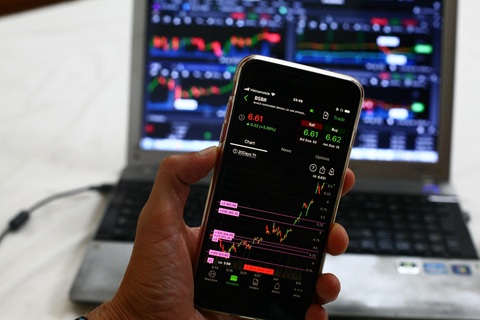
What Are CFD Brokers? (Simple Definition)
CFD brokers are financial intermediaries that give you access to trade Contracts for Difference (CFDs). They provide the platform, tools, and market access you need to speculate on price movements of various assets—without you owning the underlying asset.
Think of them as the gateway between you and the global financial markets. When you open a trade, you're not buying the actual asset (like gold or Apple shares). Instead, you're entering into a contract with the broker to exchange the difference in price from when you open to when you close.
In simple terms: CFD brokers are the companies that hold your account, execute your trades, and provide the technology you trade on.
How Do CFD Brokers Work?
Behind every trade you place, there's a process happening on the broker's end. Here's what actually happens when you click "buy" or "sell":
- You place an order on the broker's platform
- The broker receives your order and decides how to handle it
- Your order is either matched internally or sent to external liquidity providers
- The trade appears in your account with the price you got
- The broker monitors your positions, manages margin requirements, and handles any overnight financing
But here's where it gets interesting: not all CFD brokers handle your order the same way. The difference comes down to the broker's business model.
Two Types of CFD Brokers: Market Makers vs ECN/STP
CFD brokers generally fall into two categories, though some brokers operate hybrid models. Understanding which type you're using explains a lot about your trading experience.
|
Broker Type |
How It Works |
Pros |
Cons |
Who It Suits |
|
Market Maker (Dealing Desk) |
Broker is the counterparty to your trades. They set their own prices, though they follow the underlying market. |
Fixed spreads, simpler pricing, often better for beginners |
Possible requotes, spreads may be slightly wider, potential conflict of interest |
Beginners, traders who prefer predictability |
|
ECN/STP (No Dealing Desk) |
Your orders are sent directly to liquidity providers (banks, hedge funds, other traders). Broker charges commission or small markup on spreads. |
True market prices, transparency, faster execution |
Variable spreads, can widen during news, may have commissions |
Experienced traders, scalpers, those who want raw market access |
Market Maker (Dealing Desk)
Market makers create a "market" for you to trade. They quote both buy and sell prices, and they take the opposite side of your trade. Reputable market makers hedge most of their client positions externally with liquidity providers, which significantly reduces any conflict of interest. However, not all brokers fully hedge every trade—some may run unhedged positions, which increases the conflict of interest and risk for traders.
Their primary profit comes from spreads and trading volume rather than client losses, but the potential conflict remains something to understand.
ECN/STP (No Dealing Desk)
ECN (Electronic Communication Network) and STP (Straight Through Processing) CFD brokers don't take the other side of your trades. Instead, they route your orders to liquidity providers and match you with the best available price.
They make money by charging a small commission or adding a tiny markup to the spread. Their business model is more transparent, though they still benefit from higher trading volume.
Important Risks to Understand
Before trading with any CFD brokers, it's essential to understand the inherent risks:
Counterparty Risk
CFDs are typically traded over-the-counter (OTC), meaning there's no central exchange. Your main risk is the broker's solvency and how it hedges client positions. Even with regulation, you're exposed to the financial health of your broker.
Leverage Risk
Leverage amplifies both gains and losses. A small market move against you can wipe out your entire account if you're over-leveraged.
Market Volatility
CFD prices can move rapidly during news events, causing slippage and gaps that may exceed your stop losses.
Retail Trader Statistics
Industry data consistently shows that a significant majority of retail CFD traders lose money. This isn't necessarily because of broker misconduct—it's often due to leverage, market complexity, and trading psychology.
Understanding these risks is just as important as understanding how brokers work.

How Do CFD Brokers Make Money?
CFD brokers are businesses. They need to make money to operate. Here's how they do it:
|
Revenue Source |
How It Works |
Who Pays |
|
Spreads |
The difference between buy and sell price |
Every trader, on every trade |
|
Commissions |
Fixed fee per lot traded |
Common on ECN/RAW accounts |
|
Overnight Financing (Swaps) |
Interest charged on positions held overnight |
Traders who hold positions past daily close |
|
Inactivity Fees |
Monthly fee if you don't trade for a period |
Inactive accounts |
|
Withdrawal Fees |
Fee for processing withdrawals |
Traders who withdraw |
|
Currency Conversion |
Spread on deposits/withdrawals in different currencies |
International traders |
This table is neutral—it doesn't claim one model is better for all traders, just that the economics differ.
What Services Do CFD Brokers Provide?
Beyond trade execution, CFD brokers offer a range of services:
Trading Platforms
Most CFD brokers offer MetaTrader 4 (MT4), MetaTrader 5 (MT5), or proprietary platforms. These are your window to the markets—they display charts, let you place orders, and track your positions.
Leverage
CFD brokers let you trade with leverage, meaning you can control a larger position with less capital. Leverage varies by broker, asset class, and regulation—from 2:1 to 500:1 or more. Higher leverage isn't always better—it magnifies both potential profits and potential losses.
Market Access
CFD brokers decide which markets you can trade. Common offerings include:
- Forex pairs (majors, minors, exotics)
- Indices (S&P 500, FTSE 100, Nikkei 225)
- Commodities (gold, silver, oil, natural gas)
- Cryptocurrencies (Bitcoin, Ethereum)
- Shares (individual company CFDs)
For traders specifically interested in currency markets, cfd trading malaysia offers access to forex pairs with leverage and flexible trading hours.
Educational Resources
Many CFD brokers provide webinars, articles, video tutorials, and market analysis. The quality varies widely—some offer genuine education, others use it as a marketing tool.
Customer Support
When something goes wrong, support is your lifeline. Good CFD brokers offer multiple contact methods (live chat, email, phone) with reasonable response times.
Why Regulation Matters for CFD Brokers
Not all CFD brokers are created equal. Regulation is the difference between a broker that protects your money and one that might disappear with it.
|
Regulator |
Jurisdiction |
Key Protections |
|
FCA (Financial Conduct Authority) |
UK |
Segregated accounts, FSCS compensation (up to £85,000), negative balance protection for retail clients |
|
ASIC (Australian Securities and Investments Commission) |
Australia |
Client money rules, strict licensing, product intervention orders limiting CFD leverage |
|
CySEC (Cyprus Securities and Exchange Commission) |
Cyprus |
ICF compensation (€20,000), MiFID passporting, ESMA-compliant leverage limits |
|
SCM/Labuan FSA |
Malaysia |
SCM licenses derivatives (shares/indices CFDs primary). Forex CFDs restricted but available via Labuan FSA or international brokers. |
Note: "Tier-1 regulator" is not a formal category—it's a general term used to describe authorities with strict oversight. FCA, ASIC, and CySEC are widely regarded as strong regulators, though no regulator guarantees zero risk.
What regulation means for you:
- Segregated accounts: Your money is kept separate from broker funds
- Negative balance protection: You can't lose more than you deposited—required in EU/UK for retail clients, but not universal globally
- Compensation schemes: Some protection if the broker fails (up to certain limits)
- Regular audits: Financial health is monitored
- Dispute resolution: A path to complain if things go wrong
If a CFD broker claims to be regulated but you can't verify it on the regulator's official website, that's a major red flag.
How to Choose the Right CFD Brokers for You
With hundreds of CFD brokers available, how do you choose? Consider these factors:
|
Factor |
What to Ask |
|
Your Trading Style |
Scalper? Look for ECN with low spreads. Position trader? Market maker with fixed spreads may work. |
|
Markets You Trade |
Does the broker offer the assets you want? |
|
Platform Preference |
Do you need MT4, or is proprietary fine? |
|
Account Size |
Some CFD brokers have high minimum deposits |
|
Regulation |
Strong regulator or offshore? Understand the trade-offs |
|
Costs |
Spreads, commissions, swaps, fees—calculate your real cost per trade |
|
Withdrawal Reputation |
Read reviews about withdrawal experiences |
The best approach: shortlist 2-3 CFD brokers that meet your criteria, open small accounts with each, and test them side by side for a few weeks.
Final Thought
Your CFD brokers are more than just platforms—they're your partners in every trade you take. Understanding how they work, how they make money, how they're regulated, and the risks involved isn't optional. It's essential.
The best CFD brokers aren't the ones with the lowest spreads or the flashiest ads. They're the ones that align their interests with yours, operate transparently, and prove their reliability over time.
Now that you understand what CFD brokers are and how they work, you're better equipped to choose ones that fit your needs—and avoid the ones that don't.
Remember: leverage cuts both ways, most retail traders lose money, and the safest approach is to start small, learn continuously, and never risk more than you can afford to lose.
FAQs
Q: What's the difference between CFD brokers and forex brokers?
A: Forex brokers specialize in currency trading. CFD brokers offer forex plus other markets—indices, commodities, shares, crypto. Most modern brokers are CFD brokers.
Q: Are CFD brokers safe?
A: It depends on regulation, track record, and how you use them. Tier-1 regulated CFD brokers with long track records are generally safer than unregulated or offshore brokers, though no broker is 100% risk-free.
Q: Do I need a lot of money to start with CFD brokers?
A: No. Many CFD brokers offer micro accounts with minimum deposits as low as $50 or RM100. You can start small and scale up as you learn.
Q: What happens if my CFD broker goes bankrupt?
A: With tier-1 regulated CFD brokers, client funds are segregated and may be covered by compensation schemes (up to certain limits). With unregulated CFD brokers, you risk losing everything.
Q: How do I know if a CFD broker is a market maker or ECN?
A: Check their website, read the fine print, or contact support. ECN CFD brokers typically advertise "raw spreads" or "commission-based" accounts. Market maker CFD brokers often promote "fixed spreads" and "no commissions."
[Disclaimer] The articles above are purely personal opinions and are not intended to be investment advice. Only for the purpose of mutual learning and sharing. There is no express or implied warranty regarding the accuracy or completeness of the above-mentioned information. Anyone who relies on the information, ideas, or data contained in this article does so entirely at their own risk.
Next post: CFD Trading Malaysia: How to Choose a Trusted Forex Broker
Previous post: Weekly Market Recap 2026-05-18