
Dollar Cost Averaging: A Smart Investment Strategy for Long-Term Success
Categories: CFD Trading
Tags: dollar cost averaging
Publish date: 2025-3-27
Investing in the stock market can be a daunting task, especially for those who are new to the world of finance. With market volatility and unpredictable trends, it can be challenging to know when to buy and sell stocks. However, one investment strategy that has stood the test of time is dollar cost averaging. In this article, we will delve into the ins and outs of dollar cost averaging, exploring its benefits, drawbacks, and how to implement it in your investment strategy. We will also touch upon how this strategy can be applied to various investment instruments like cryptocurrencies, commodities, and indices. Additionally, we will provide insights into using the FXCM trading platform and the benefits of opening a demo account to practice dollar cost averaging. Finally, we will answer some frequently asked questions about dollar cost averaging to help you make informed decisions about your investments.
Table of Contents
Recurring Investment and Dollar Cost Averaging: What's the Difference?
What is Dollar Cost Averaging?
Recurring Investment vs Dollar Cost Averaging
Benefits of Dollar Cost Averaging
Drawbacks of Dollar Cost Averaging
How to Implement Dollar Cost Averaging in Your Investment Strategy
Using the FXCM Trading Platform and Demo Account
Conclusion
FAQs
Recurring Investment and Dollar Cost Averaging: What's the Difference?
When it comes to investing, two popular strategies often mentioned are recurring investment and dollar cost averaging. While these concepts share some similarities, they also have distinct differences. Understanding these differences can help investors make informed decisions about their investment strategies.
Recurring investment refers to the practice of making regular, periodic contributions to an investment account. This can be done on a weekly, monthly, quarterly, or annual basis, depending on the investor's preference and financial goals. The key aspect of recurring investment is the consistency and predictability of the contributions, which can help investors build their portfolio over time and potentially benefit from the valuation of stock as market value fluctuates.
For example, an investor might set up an automatic transfer from their checking account to their investment account every month. This ensures that they are consistently adding to their investment portfolio without having to manually make the transfer each time, and can take advantage of changes in the market value of their investments.
Recurring investment is beneficial because it helps investors establish a disciplined approach to investing. By making regular contributions, investors can take advantage of the power of compounding and potentially grow their wealth over time.
What is Dollar Cost Averaging?
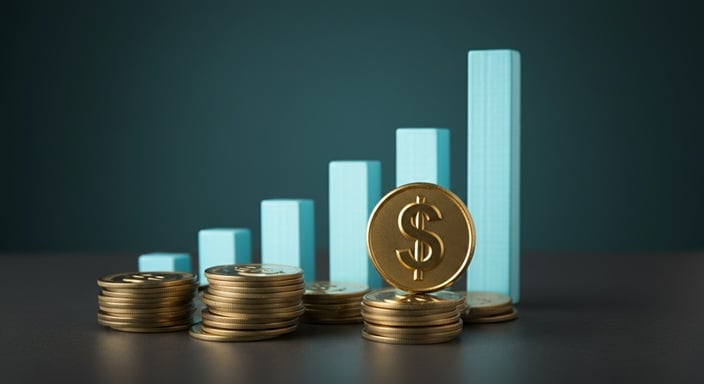
Dollar cost averaging is an investment strategy that involves investing a fixed amount of money at regular intervals, regardless of the market price. This implies purchasing more shares during market downturns and fewer shares when the market is on the rise.. The idea behind dollar cost averaging is to reduce the impact of market volatility on your investments and to help you prevent the urge to time the market.
For example, let's say you want to invest 1,000 in a particular stock. Instead of investing the entire amount at once, you decide to invest 100 every month for ten months. This means that you will buy more shares when the stock price is low and fewer shares when the stock price is high. Over time, the average cost per share will even out, and you will have a more diversified portfolio, benefiting from portfolio diversification as you spread your investments over time and price points..
Recurring Investment vs Dollar Cost Averaging
While recurring investment and dollar cost averaging both involve making regular contributions to an investment account, the key difference lies in the approach to buying investments.
Recurring investment simply refers to the regular contributions themselves, without specifying how those contributions are invested. The investor could choose to invest the entire contribution in one investment, spread it across multiple investments, or even keep some of it in cash.
Dollar cost averaging, on the other hand, is a specific strategy for investing those regular contributions. It involves investing a fixed dollar amount in a particular investment at regular intervals, regardless of the share price.
In summary, recurring investment is a broad practice of making regular contributions to an investment account, while dollar cost averaging is a specific strategy for investing those contributions in a way that reduces the impact of market volatility. Understanding the difference between the two can help investors choose the best approach for their investment goals and risk tolerance.
Benefits of Dollar Cost Averaging
- Mitigates the Effects of Market Volatility
One of the primary advantages of dollar cost averaging is that it minimizes the effect of market volatility on your investments. By investing a fixed amount of money at regular intervals, you avoid the risk of investing a lump sum at the wrong time. This can help you avoid significant losses and take advantage of market dips, whether you're investing in crude oil, gold or other commodities and indices.
- Encourages Disciplined Investing
Dollar cost averaging encourages disciplined investing by helping you stick to a regular investment schedule. This can help you avoid the temptation to time the market or make impulsive investment decisions based on emotions. By investing a fixed amount of money at regular intervals, you can stay focused on your long-term investment goals.
- Helps You Avoid Market Timing
Market timing is a strategy that involves trying to predict the direction of the market and buying or selling stocks accordingly. However, market timing is extremely difficult, even for experienced investors. Dollar cost averaging helps you avoid the risk of market timing by taking the emotion out of investing and allowing you to invest regularly, regardless of market conditions.
- Averages Out the Cost per Share
Dollar cost averaging helps to average out the cost per share over time. This means that you will buy more shares when the market is down and fewer shares when the market is up. Over time, this can help to reduce the overall cost per share and improve your returns, whether you're investing in traditional stocks or exploring options like crypto and gold trading.
Drawbacks of Dollar Cost Averaging
While dollar cost averaging has many benefits, it also has some drawbacks that you should be aware of.
- Potential to Miss Out on Gains
One of the drawbacks of dollar cost averaging is that you may miss out on gains if the market continues to rise. By investing a fixed amount of money at regular intervals, you may not take advantage of the full potential of a rising market. However, it's important to remember that dollar cost averaging is a long-term strategy, and the goal is to achieve steady returns over time, rather than trying to time the market.
- Transaction Fees
Another potential drawback of dollar cost averaging is that it can result in higher transaction fees. If you are investing small amounts of money at regular intervals, you may be subject to transaction fees each time you buy shares. These fees can add up over time and reduce your overall returns. It's essential to consider these fees, especially when investing in various instruments like forex, crypto, and commodity markets.
- Not Suitable for All Investments
Dollar cost averaging is not suitable for all investments. For example, it may not be a good strategy for investing in individual stocks that are highly volatile or have a low trading volume. In these cases, it may be better to invest a lump sum when the stock price is low.
How to Implement Dollar Cost Averaging in Your Investment Strategy
Now that you understand the benefits and drawbacks of dollar cost averaging, let's look at how you can implement this strategy in your investment plan.
1) Determine Your Investment Goals
Before you start investing, it's important to determine your investment goals. Are you investing for retirement, a down payment on a house, or to build wealth over the long-term? Once you have a clear understanding of your investment goals, you can develop a plan that aligns with your objectives, whether they pertain to traditional markets or newer options like crypto and forex trading.
2) Choose Your Investments
Next, you need to choose the investments that you want to include in your dollar cost averaging strategy. This could be a mutual fund, exchange-traded fund (ETF), individual stocks, or even investment instruments like forex, crypto, gold, or commodity markets. It's important to choose investments that align with your investment goals and risk tolerance. Platforms like the FXCM offer a wide range of investment options to explore.
3) Set Up Automatic Investments
To implement dollar cost averaging, you need to set up automatic investments. This could be through your brokerage account or through a direct debit from your bank account. By setting up automatic investments, you can ensure that you are investing a fixed amount of money at regular intervals, regardless of market conditions.
4) Monitor Your Investments
While dollar cost averaging is a hands-off approach to investing, it's important to monitor your investments regularly. This means reviewing your portfolio at least once a year and making adjustments as needed. You should also keep an eye on market trends and economic conditions that may impact your investments, including those in forex, crypto, and commodity markets.
5) Stay Committed to Your Investment Plan
Finally, it's important to stay committed to your investment plan. Dollar cost averaging is a long-term strategy, and it may take several years to see significant returns. It's important to stay focused on your investment goals and avoid the temptation to make impulsive investment decisions based on short-term market fluctuations.
Using the FXCM Trading Platform and Demo Account
To practice dollar cost averaging and explore various investment options like forex, crypto, and commodity trading, consider using the FXCM trading platform, which provides seamless access to a diverse range of financial instruments, allowing investors to build well-rounded portfolios. By combining fundamental analysis—evaluating company financials, industry trends, and macroeconomic factors—with technical analysis, investors can make informed decisions. Additionally, FXCM offers a demo account that allows you to test your investment strategies without risking real money, making it an excellent way to familiarize yourself with the platform and the concept of dollar cost averaging before investing your hard-earned cash.
Conclusion
Dollar cost averaging is a smart investment strategy that can help you reduce the impact of market volatility on your investments, encourage disciplined investing, and avoid the temptation to time the market. While it has some drawbacks, such as the potential to miss out on gains and higher transaction fees, it can be a valuable addition to your investment plan, whether you're investing in traditional markets or exploring newer options like crypto and forex trading. By following the steps outlined in this article, utilizing platforms like the FXCM, and staying committed to your investment goals, you can use dollar cost averaging to achieve long-term success in the stock market and beyond.
FAQs
Q: What is the difference between dollar cost averaging and lump sum investing?
A: Dollar cost averaging involves investing a fixed amount of money at regular intervals, regardless of the market price. Lump sum investing involves investing a large amount of money all at once. Dollar cost averaging can help to reduce the impact of market volatility on your investments, while lump sum investing can be risky if the market is experiencing volatility at the time of investment.
Q: Is dollar cost averaging a good strategy for retirement investing?
A: Dollar cost averaging can be a good strategy for retirement investing because it helps to reduce the impact of market volatility on your investments and encourages disciplined investing. However, it's important to remember that retirement investing is a long-term strategy, and you should consider your investment goals and risk tolerance before implementing any investment strategy.
Q: Can I use dollar cost averaging with individual stocks?
A: While dollar cost averaging can be used with individual stocks, it may not be the best strategy for highly volatile or low trading volume stocks. In these cases, it may be better to invest a lump sum when the stock price is low.
Q: How often should I invest when using dollar cost averaging?
A: The frequency of your investments will depend on your investment goals and personal preferences. Some investors prefer to invest monthly, while others may invest weekly or bi-weekly. It's important to choose a frequency that works for you and aligns with your investment plan.
Q: Do I need to pay transaction fees when using dollar cost averaging?
A: If you are investing small amounts of money at regular intervals, you may be subject to transaction fees each time you buy shares. These fees can add up over time and reduce your overall returns. It's important to consider transaction fees when developing your investment plan and to choose a brokerage that offers low fees, such as the FXCM trading platform.
[Disclaimer] The articles above are purely personal opinions and are not intended to be investment advice. Only for the purpose of mutual learning and sharing. There is no express or implied warranty regarding the accuracy or completeness of the above-mentioned information. Anyone who relies on the information, ideas, or data contained in this article does so entirely at their own risk.