
Crude Oil and Fractional Distillation: How Refining Transforms Oil Into Products
Categories: Gold and Commodities Trading
Tags: crude oil and fractional distillation
Publish date: 2026-7-19
Crude Oil and Fractional Distillation: The Refining Process Explained
Crude oil has limited direct use in its raw form. Before it can power a car, heat a home, or fuel an aircraft, it must be separated into its component parts. The process that does this is called fractional distillation, and it is the foundation of every refinery on earth.
Crude oil and fractional distillation are linked because crude is a mixture of hydrocarbons with different boiling points. Fractional distillation separates these hydrocarbons into fractions — groups of molecules that boil within specific temperature ranges. Each fraction becomes a different product.
For investors, understanding how refining works provides context for why different crudes command different prices, why refinery configuration matters, and how refining margins affect the oil market.
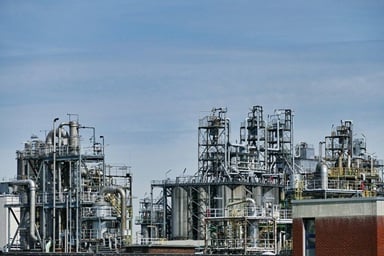
What Crude Oil Actually Contains
Crude oil is not a single substance. It is a complex mixture of hydrocarbons — molecules made of hydrogen and carbon — ranging from very light gases to very heavy, tar-like compounds.
- Light hydrocarbons have small molecules and low boiling points. They include methane, ethane, propane, and butane.
- Medium hydrocarbons form liquids at room temperature. These become gasoline, diesel, kerosene, and jet fuel.
- Heavy hydrocarbons have large molecules and high boiling points. They become lubricating oils, waxes, and bitumen.
The exact composition varies by crude grade. Light crudes like Tapis contain a higher proportion of light and medium hydrocarbons. Heavy crudes contain more heavy hydrocarbons. This difference in composition directly affects the value of the crude and the products that can be made from it.
How Fractional Distillation Works
Fractional distillation is based on a simple principle: different hydrocarbons boil at different temperatures. By heating crude oil and passing the vapour through a tall column, the components can be separated.
Step 1: Heating. Crude oil is heated in a furnace to around 350 to 400 degrees Celsius. Most of the hydrocarbons vaporise and rise into the distillation column.
Step 2: Separation in the column. The distillation column is a tall, vertical tower divided into sections by trays or packing material. The bottom of the column is hottest, and the temperature decreases towards the top. As vapour rises, it cools. When the temperature drops below the boiling point of a particular hydrocarbon fraction, that fraction condenses into liquid and is drawn off.
Step 3: Collection by fraction. Different fractions are collected at different heights in the column. The lightest fractions — those with the lowest boiling points — rise to the top as gases. The heaviest fractions remain at the bottom as liquids or semi-solids.
Crude Oil Yield from Refining
Each fraction from the distillation column becomes a different product or feedstock for further processing.
|
Fraction |
Boiling Range (°C) |
Products |
|
Gases |
Below 30 |
Methane, ethane, propane, butane — used for heating, cooking, and as petrochemical feedstock |
|
Naphtha |
30–200 |
Gasoline blending and petrochemical feedstock for plastics |
|
Kerosene |
150–275 |
Jet fuel and heating oil |
|
Diesel |
200–350 |
Diesel fuel for vehicles and machinery |
|
Heavy gas oil |
250–400 |
Industrial fuel, further processing into diesel |
|
Residue |
Above 400 |
Bitumen for roads, heavy fuel oil for ships and power plants |
Light crudes yield more naphtha, kerosene, and diesel — the higher-value products. Heavy crudes yield more residue, which usually sells at a discount unless it is upgraded or blended into other fuels. This is a key reason why light crudes like Tapis and Brent typically trade at a premium, subject to other factors such as freight and refining demand.
Beyond Distillation: Additional Refining Processes
Fractional distillation alone does not produce finished fuels. Several additional processes are used to increase the yield of high-value products.
Cracking. Heavy hydrocarbons are broken into lighter ones using heat, pressure, and catalysts. A fluid catalytic cracker takes heavy gas oil and produces more gasoline and diesel. Cracking is a conversion process that changes the molecular structure of hydrocarbons. Without it, a refinery would be stuck with the product mix that comes naturally from the crude.
Reforming. Naphtha is processed to improve its octane rating for gasoline blending. Reforming rearranges hydrocarbon molecules rather than breaking them apart.
Hydrotreating. Sulphur is removed from diesel, kerosene, and other fractions by reacting them with hydrogen. This is essential for meeting environmental standards and is more intensive for sour crudes with high sulphur content.
Blending. Finished fuels are blends of different refinery streams, mixed to meet specifications for octane, volatility, and emissions.
A refinery's complexity — measured by its ability to process heavy crudes and produce high-value products — determines its profitability and the range of crudes it can economically refine over the cycle.
Why Refinery Configuration Matters for Crude Demand
Not all refineries can process all crudes. A refinery's configuration determines which grades it can buy and has a direct impact on which crude grades are economically attractive.
Simple refineries (often hydroskimming-type) are best suited to process light, sweet crudes. They have limited ability to crack heavy fractions or remove sulphur. They produce less gasoline per barrel and more residual fuel oil.
Complex refineries (full conversion) have crackers, reformers, and hydrotreaters. They can process heavier, sourer crudes and still produce high yields of gasoline and diesel. They are more expensive to build but more flexible and profitable over the cycle.
The mix of simple versus complex refineries in a region shapes the relative value of light, sweet crudes versus heavier, sourer grades. Complex refineries can buy cheaper, heavier crudes and still produce valuable products. Simple refineries must buy higher-quality crude and pay the premium that quality commands. The same refining dynamics apply to crude oil in Malaysia, where light sweet grades like Tapis are exported to complex refineries across Asia.
Crude Oil Refining Margins and Crack Spreads
Refining margins — often called crack spreads — measure the difference between the cost of crude oil and the value of the products produced from it.
Crack spreads are commonly monitored via refinery-margin benchmarks such as 3-2-1 gasoline/diesel crack spreads, and regional spreads around key hubs like Singapore and the US Gulf Coast.
- A wide crack spread signals strong refining profitability. Refiners are earning more for their products relative to what they pay for crude. This encourages higher refinery utilisation and increased crude purchases.
- A narrow crack spread signals weak profitability. Refiners may reduce runs, particularly if margins turn negative. This reduces crude demand.
Investors track crack spreads as an indicator of refining sector health and as a signal of crude demand. Rising crack spreads generally support crude prices. Falling crack spreads can weigh on them.
Once you understand how refining transforms crude into different products, you can use an FXCM demo account to follow crude oil and refined product prices and see how refining margins shape the real‑world value of a barrel of oil.
Final Thoughts
Crude oil and fractional distillation are the starting point for every petroleum product. The distillation column separates crude into fractions. Additional processes — cracking, reforming, hydrotreating — upgrade those fractions into finished fuels. The configuration of a refinery determines which crudes it can process and how profitably it can operate.
For investors, understanding refining provides context for crude price differences, regional demand patterns, and the economic signals embedded in refining margins. A barrel of crude is only as valuable as the products that can be extracted from it.
FAQs
Q: What is the difference between fractional distillation and cracking?
A: Fractional distillation separates crude oil into fractions based on boiling points. Cracking breaks heavy hydrocarbons into lighter ones to produce more gasoline and diesel. Distillation is a separation process. Cracking is a conversion process that changes the molecular structure of hydrocarbons.
Q: Why do light crudes produce more gasoline than heavy crudes?
A: Light crudes contain a higher proportion of hydrocarbons in the gasoline and diesel boiling range per barrel. Heavy crudes contain more residue. A refinery processing light crude gets more high-value products per barrel without needing complex conversion equipment.
Q: What is a crack spread?
A: A crack spread is the price difference between crude oil and the refined products made from it — typically gasoline and diesel. It measures refining profitability. A widening spread signals better margins. A narrowing spread signals the opposite.
Q; Can all refineries process all types of crude?
A: No. Simple refineries are best suited to light, sweet crude. Complex refineries can process heavier, sourer grades. A refinery's configuration determines which crudes it can buy and how profitably it can operate.
Q: How does refinery maintenance affect crude oil demand?
A: When refineries shut down for scheduled maintenance — typically in spring and autumn — crude demand falls temporarily. This can lead to inventory builds and downward pressure on crude prices, particularly for the grades those refineries normally process.
[Disclaimer] The articles above are purely personal opinions and are not intended to be investment advice. Only for the purpose of mutual learning and sharing. There is no express or implied warranty regarding the accuracy or completeness of the above-mentioned information. Anyone who relies on the information, ideas, or data contained in this article does so entirely at their own risk.