
Crude Oil in Malaysia: The Full Value Chain from Production to Export
Categories: Gold and Commodities Trading
Tags: crude oil in malaysia
Publish date: 2026-7-20
Crude Oil in Malaysia: Production, Refining and Export Value Chain
Malaysia is one of Southeast Asia's most significant oil producers, but production is only one part of the story. Crude oil in Malaysia flows through a connected value chain — from offshore platforms in the South China Sea, through pipelines and tankers, to domestic refineries and export markets across Asia.
For investors, understanding how these pieces fit together provides context that isolated data points cannot. Production volumes, refinery utilisation rates, export destinations, and the role of Petronas are not separate topics. They are connected stages in a single system.
This article walks through Malaysia's crude oil value chain — upstream, midstream, and downstream — and explains how each stage affects the others.
Upstream: Where Malaysia Crude Oil Production Happens
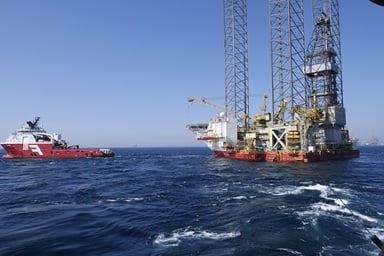
Malaysia's crude production is concentrated in three offshore basins. Each has distinct characteristics and contributes differently to the country's output.
The Malay Basin
Located off the east coast of Peninsular Malaysia, this is the country's most mature producing region. It has yielded oil for decades and remains the source of Tapis, Malaysia's signature light sweet crude.
- Status: Mature, fields in decline
- Key grade: Tapis
- Recovery efforts: Enhanced oil recovery techniques helping sustain output
The Sarawak Basin
This basin is more gas-prone, though it also produces some crude and condensate. Much of the region's hydrocarbons are tied to integrated gas projects linked to the Bintulu LNG complex.
- Status: Active exploration, new finds regularly
- Output mix: Primarily gas, with crude and condensate
- Infrastructure: Linked to Bintulu LNG complex
The Sabah Basin
Deepwater fields such as Kikeh have made Sabah an increasingly important contributor. These fields require higher investment and more complex technology but have added significant crude volumes.
- Status: Growing contributor, deepwater focus
- Key field: Kikeh
- Investment profile: Higher cost, larger potential reserves
Malaysia produces several hundred thousand barrels of liquids per day, with output varying over time across crude, condensate, and gas. Gas accounts for a substantial share of Malaysia's hydrocarbon output, alongside crude oil and condensate.
Petronas and Malaysia’s Production Sharing Contract System
Petronas, through its Malaysia Petroleum Management division, manages the country's upstream sector under a production sharing contract framework.
How a Typical PSC Functions
Under a typical PSC, an oil company enters into an agreement to explore and produce oil in a defined area. The process follows a clear structure:
- Exploration: The contractor bears all exploration costs. If no commercial discovery is made, the costs are written off.
- Cost recovery: If oil is found, the contractor recovers costs from a portion of production, known as cost petroleum.
- Profit split: What remains after cost recovery is split between the contractor and the state.
International oil companies and local operators participate alongside Petronas Carigali under PSC structures. These partnerships span the three producing basins and bring technical expertise and capital to Malaysian exploration and development.
Why the PSC Model Matters for Investors
The PSC system means investment decisions, production levels, and the pace of new development are shaped by contract terms as much as by geology. For investors, PSC terms influence which fields get developed and how quickly.
Midstream: Moving Crude Oil from Platform to Refinery
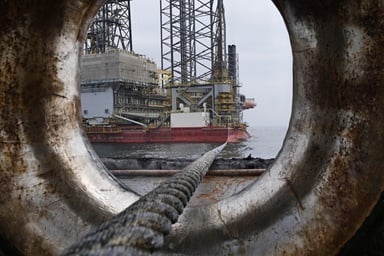
Once produced, crude oil must reach a refinery or export terminal. Malaysia's midstream infrastructure connects offshore platforms to onshore facilities.
Pipelines
A network of subsea pipelines connects offshore fields to onshore terminals.
- Malay Basin: Crude flows to terminals along the east coast of Peninsular Malaysia
- Sabah and Sarawak: Regional pipeline systems connect to local processing and export facilities
Floating Production Systems (FPSOs)
In deepwater areas where pipelines are uneconomical, FPSOs handle production, store crude, and offload it directly to tankers. Kikeh in Sabah uses an FPSO, as do several other Malaysian fields.
Tankers and Export Terminals
Export-grade crude is loaded onto tankers at terminals in Kerteh, Bintulu, Labuan, and other ports. From there, it sails to refineries across Asia.
Storage
Tank farms at major terminals buffer the flow between production and export. Malaysia also maintains strategic petroleum storage, though on a smaller scale than IEA member countries.
The midstream system determines how efficiently Malaysian crude reaches buyers. Bottlenecks — pipeline capacity constraints, storage limitations, port congestion — can affect the price producers receive.
Downstream: Refining and Domestic Consumption
Not all Malaysian crude is exported. A portion is refined domestically.
Refining Capacity
Malaysia has several refineries, including facilities at Kerteh, Melaka, Port Dickson, and the Pengerang Integrated Complex in Johor. Pengerang, the newest and largest, is designed to process a range of crudes and produce high-value products for both domestic use and export.
The Import-Export Dynamic
Malaysia exports light sweet crude — grades like Tapis, Kikeh, and Kimanis — and imports heavier crudes for its domestic refineries. This happens because Malaysian refineries are configured to process a mix of crudes.
- Light domestic grades are more valuable as exports
- Heavier imports are cheaper feedstock for refineries designed to handle them
Domestic Fuel Supply
Refined products from Malaysian refineries supply the domestic market — petrol, diesel, jet fuel, and LPG. The government subsidises certain fuels, particularly RON95 petrol, which affects the economics of the downstream sector.
Where Malaysia Exports Crude Oil
Malaysia exports crude mainly to Asian buyers. Regional markets such as Thailand, Japan, Australia, and India are among the main buyers. Proximity reduces shipping costs, and the quality of Malaysian grades is well suited to Asian refinery configurations.
Petronas plays a central role in marketing Malaysian crude, using term contracts and spot sales. The monthly Official Selling Price for key Malaysian crude grades is set as a differential to Dated Brent.
For investors, the direction of Malaysian crude exports provides a signal of regional demand. Strong demand from Asian refiners supports both volumes and pricing.
How Malaysia’s Crude Oil Value Chain Connects
Each stage of the value chain affects the others. Decisions made upstream ripple downstream, and vice versa.
- A production decline in the Malay Basin reduces the volume of light sweet crude available for export. This may support the Tapis premium but also reduces export revenue
- A new deepwater discovery in Sabah adds to future production but requires years of development spending before first oil
- Refinery maintenance at Pengerang temporarily reduces domestic crude demand, freeing more for export but potentially weighing on prices if the market is well supplied
- Rising Asian demand for gasoline increases the value of light sweet crude, improving the economics of Malaysian exports
For investors, understanding these connections provides a more complete picture than tracking any single indicator. A production figure without context on where that crude is going and what it is worth tells only part of the story.
Seeing how Malaysia’s crude oil value chain connects production, refining, and export flows, you can use an FXCM demo account to compare Brent and regional benchmarks and see how shifts in one part of the chain ripple across the broader oil market.
Final Thought
Crude oil in Malaysia is not a single data point. It is a system — upstream production, midstream transport, downstream refining, and export to Asian markets — guided by Petronas' management and the PSC framework.
For investors, understanding this value chain means understanding that production volumes, refinery activity, and export demand are not separate topics. They are connected. A change in one part of the chain affects the others. The investor who sees the whole system is better equipped than one who focuses on any single part.
FAQs
Q: How much crude oil does Malaysia produce versus consume?
A: Malaysia produces more crude than it consumes domestically, making it a net exporter. However, it imports heavier crude grades for its refineries while exporting lighter domestic production.
Q: What is the role of Petronas in Malaysia's crude oil value chain?
A: Petronas manages the upstream sector through Malaysia Petroleum Management, markets Malaysian crude, and oversees the PSC system that governs exploration and production. It is the central player across the entire value chain.
Q: Where does Malaysia export most of its crude oil?
A: Asian markets — including Thailand, Japan, Australia, and India — are among the main destinations. Shorter shipping distances and compatible refinery configurations make these natural buyers.
Q: Why does Malaysia import crude oil if it is a net exporter?
A: Domestic refineries are configured to process a mix of crudes. Lighter Malaysian grades are more valuable as exports. Heavier imported crudes serve as cheaper feedstock for refineries designed to handle them.
Q: How does refinery capacity affect Malaysian crude exports?
A: When domestic refineries are running at high utilisation, more crude is processed locally and less is available for export. During maintenance shutdowns, more crude flows to export markets.
[Disclaimer] The articles above are purely personal opinions and are not intended to be investment advice. Only for the purpose of mutual learning and sharing. There is no express or implied warranty regarding the accuracy or completeness of the above-mentioned information. Anyone who relies on the information, ideas, or data contained in this article does so entirely at their own risk.