
What Determines the Gold Ingot Price and Why Premiums Vary
Categories: Gold and Commodities Trading
Tags: How Gold Ingot Price is Set
Publish date: 2026-10-13
How Gold Ingot Price is Set
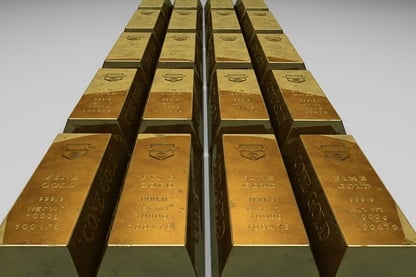
A 1-kilogram gold ingot is not just a bigger version of a 10-gram bar. It is priced differently, bought by different types of investors, and sold through different channels. Understanding the gold ingot price means understanding why large bars carry the lowest premiums in the gold market — and what trade-offs come with that efficiency.
For investors considering a substantial gold allocation, ingots offer the most metal for the money. But the pricing mechanics, the buyer pool, and the liquidity profile differ from smaller bars and coins. This article explains how gold ingots are priced, what affects their premiums, and what to consider before buying.
What Is a Gold Ingot
The term "ingot" generally refers to a large cast gold bar, typically 1 kilogram or heavier. While the word is sometimes used interchangeably with "bar," ingots are almost always cast rather than minted, giving them a distinctive appearance and pricing structure.
- Gold ingots commonly range from 1 kilogram to 12.5 kilograms, the standard size for London Good Delivery bars used in institutional trading
- Investment-grade ingots are 999.9 fineness — 99.99 percent pure gold
- Cast ingots have a simple, industrial look. The surface may show slight irregularities from the mould. They are stamped with weight, purity, a serial number, and the refiner's mark
Ingots are the format of choice for central banks, institutional investors, and high-net-worth individuals. They represent the most cost-efficient way to own physical gold by weight.
How the Gold Ingot Price Is Determined
Like all physical gold, the price of an ingot is built from three components.
Step 1: The international spot price. Gold trades globally in US dollars per troy ounce. This is the starting point for all gold pricing.
Step 2: Currency conversion. The dollar spot price is multiplied by the USD/MYR exchange rate to arrive at a ringgit figure. This is then divided by 31.1035 to convert from per troy ounce to per gram.
Step 3: The dealer premium. A margin is added to cover manufacturing, shipping, insurance, and the dealer's profit. For ingots, this premium is the lowest of any gold product — typically 1 to 3 percent above spot for a 1-kilogram bar.
Gold Ingot Price = (Spot Price × USD/MYR ÷ 31.1035) + Dealer Premium
The larger the ingot, the lower the premium per gram. Fixed costs — packaging, handling, shipping — are spread over more metal.
Example calculation. If spot is $2,000 per ounce and USD/MYR is 4.70:
- Base per gram = (2,000 × 4.70) ÷ 31.1035 = RM302.20
- With 2% premium = RM302.20 × 1.02 = RM308.24 per gram
- 1kg ingot = RM308.24 × 1,000 = RM308,240
Why Ingot Premiums Are the Lowest in the Market
The premium on a gold ingot is smaller than on any other gold product. Three factors explain this.
Economies of scale. A 1-kilogram ingot costs roughly the same to manufacture, package, and ship as a 100-gram bar. When those fixed costs are spread over 1,000 grams instead of 100, the cost per gram drops significantly.
Simple production. Cast ingots are produced by pouring molten gold into a mould. The process is less complex and less costly than minting, which requires rolling, cutting, and die-striking. The simpler process means a lower manufacturing cost.
Institutional demand. The buyers of large ingots — central banks, institutions, high-net-worth investors — are price-sensitive and deal in volume. They expect the tightest premiums. Dealers competing for this business keep margins thin.
|
Product |
Typical Size |
Typical Premium Above Spot |
|
1g minted bar |
1 gram |
15–25% |
|
10g minted bar |
10 grams |
8–12% |
|
100g cast bar |
100 grams |
4–7% |
|
1kg gold ingot |
1 kilogram |
1–3% |
|
London Good Delivery bar |
~12.5kg |
Under 1% |
The trade-off is liquidity, which is covered below.
Gold Bar vs Gold Ingot: Product Spectrum Comparison
Gold ingots occupy one end of a spectrum that runs from small, accessible products to large, institutional formats. Understanding where ingots fit helps investors decide whether they suit their needs.
|
Product Type |
Weight Range |
Typical Buyer |
Key Feature |
|
Small minted bars |
1g – 100g |
Retail investors, gift buyers |
Flexibility, easy to sell in portions |
|
Medium cast bars |
100g – 500g |
Serious individual investors |
Balance of premium and liquidity |
|
Gold ingots |
1kg+ |
High-net-worth, institutions |
Lowest premium, best value per gram |
|
Good Delivery bars |
~12.5kg |
Central banks, institutions |
Wholesale gold market standard |
Ingots are not for everyone. They require a substantial upfront commitment, and selling a 1-kilogram bar means finding a buyer for the entire bar. But for investors who can afford them and plan to hold long-term, they offer the most efficient gold exposure available in physical form.
How to Check If a Gold Ingot Price Is Fair
Verifying whether a quoted ingot price is reasonable takes only a few minutes.
- Check the spot price. Search "gold spot price USD" for the current rate per troy ounce.
- Check the exchange rate. Search "USD to MYR" for the current rate.
- Calculate the base price per gram. Use the formula: (Spot Price × USD/MYR) ÷ 31.1035.
- Compare with the dealer's price. Subtract your calculated base from the quoted price. The difference is the dealer's premium in ringgit per gram. For a 1-kilogram ingot, a premium of 1 to 3 percent above spot is typical.
- Compare across dealers. Check two or three dealers. Small differences in premium are normal. A premium significantly below market should prompt verification of the dealer's reputation and the bar's authenticity.
For investors who track the relationship between gold and other precious metals, the gold silver ratio provides additional context — when silver is historically cheap relative to gold, some investors adjust their allocation between the two metals rather than buying gold alone.
Storing Large Gold Bars: Security and Preservation
A 1-kilogram ingot requires secure storage. A home safe with adequate capacity or a bank safe deposit box is typical. Some investors use professional vaulting services for larger holdings.
Unlike jewellery, ingots do not need special handling beyond basic security. The cast surface may show minor irregularities, but this does not affect value. Store ingots in their original assay packaging to preserve the certificate and maintain authenticity verification.
Gold Ingot Liquidity: Understanding the Trade-Off
The ingot's greatest strength — its low premium — is also the source of its main limitation. Large bars are harder to sell than smaller ones.
- Fewer buyers. The pool of buyers for a 1-kilogram gold bar is smaller than for a 10-gram bar. Fewer individuals can afford it. Dealers may need time to find a buyer rather than purchasing it for their own inventory.
- All-or-nothing sale. A 10-gram bar can be sold without touching the rest of a gold holding. A 1-kilogram ingot must be sold whole. This limits flexibility for investors who may want to sell only a portion.
- Verification expectations. Buyers of large ingots may request additional verification — weighing, XRF testing, or even drilling to confirm the bar is solid gold throughout. This is standard practice for large bars and should not be taken as suspicion.
For investors who need flexibility, a combination of one or two ingots for the bulk of a holding and smaller bars or coins for incremental sales may strike the right balance.
Who Typically Buys Gold Ingots
Understanding the typical buyer profile helps investors assess whether ingots suit their own situation.
- High-net-worth individuals seeking the most cost-efficient physical gold exposure
- Institutional investors allocating a percentage of a portfolio to physical gold
- Family offices preserving wealth across generations
- Central banks adding to reserves, though they typically buy Good Delivery bars rather than 1-kilogram ingots
Ingots are not suited to investors who may need to sell quickly or in small amounts. They are a long-term wealth preservation tool, not a trading instrument.
Final Thought
The gold ingot price reflects the most efficient form of physical gold ownership available to individual investors. The premium over spot is the lowest in the market. The metal content is the highest relative to the purchase price. The trade-off is liquidity — large bars require large buyers.
For investors with the capital and the long-term horizon, ingots offer unmatched value per ringgit. The pricing is transparent, the product is standardised, and the global market for large gold bars is deep and liquid at the institutional level. Understanding how ingots are priced — and where they fit in the spectrum of gold products — allows investors to make an informed choice rather than defaulting to smaller, higher-premium alternatives.
FAQs
Q: What is the difference between a gold ingot and a gold bar?
A: The terms overlap. "Ingot" typically refers to larger cast bars of 1 kilogram and above. "Bar" is a broader term that includes both cast and minted products across all sizes.
Q: Why do gold ingots have lower premiums than smaller bars?
A: Fixed manufacturing, packaging, and shipping costs are spread over more grams of gold. A 1-kilogram ingot costs roughly the same to produce and deliver as a 100-gram bar, resulting in a much lower cost per gram.
Q: Can a gold ingot be sold back to any dealer?
A: Most bullion dealers will buy back ingots from recognised refiners. The buy-back price is typically based on the current spot price minus a small spread. Original receipts and assay certificates speed up the process.
Q: Is a 1-kilogram gold ingot practical for most investors?
A: It depends on the investor's total portfolio and liquidity needs. An ingot offers the best value per gram but requires a substantial upfront commitment and is less flexible when selling. Investors who may need to sell in smaller amounts should consider a mix of ingots and smaller bars or coins.
Q: What documentation should come with a gold ingot?
A: A receipt from the dealer and an assay certificate or card verifying weight, purity, and serial number. The serial number on the certificate should match the number stamped on the ingot.
[Disclaimer] The articles above are purely personal opinions and are not intended to be investment advice. Only for the purpose of mutual learning and sharing. There is no express or implied warranty regarding the accuracy or completeness of the above-mentioned information. Anyone who relies on the information, ideas, or data contained in this article does so entirely at their own risk.
Next post: 📊 DAILY MARKET UPDATE | 14 OCT 2026
Previous post: 📊 DAILY MARKET UPDATE | 13 OCT 2026