
Malaysia Gold Rate: How to Check and Interpret Live Gold Prices
Categories: Gold and Commodities Trading
Tags: malaysia gold rate
Publish date: 2026-8-24
Malaysia Gold Rate: Where to Check and How to Read Gold Prices
Gold prices move constantly during market hours. For Malaysian investors, the Malaysia gold rate is the figure that appears on dealer websites, bank platforms, and financial portals — the local ringgit price used for buying and selling gold.
But the rate is not the same everywhere. Different sources update at different frequencies. Some show live prices. Others show daily rates set each morning. The buy price differs from the sell price. Per-gram quotes differ from per-ounce quotes. And the ringgit exchange rate adds another layer of movement that the international spot price alone does not capture.
This article explains where to check the Malaysia gold rate, how to read the numbers, and why the rate varies between sources.
What the Malaysia Gold Rate Means for Buyers and Sellers
The Malaysia gold rate is the local retail price of gold quoted in ringgit. It is derived from the international spot price but adjusted for the USD/MYR exchange rate and dealer premiums.
For most retail investors, this is the practical number. It is what a dealer charges when selling a gold bar. It is what a bank quotes for a gold account transaction. It is the figure displayed when checking gold prices online.
The rate is not set by a single authority — unlike the public gold price, which varies by dealer — each provider calculates their own rate based on the same underlying spot price, which is why different sources may show slightly different figures at the same moment.
Where to Find Live Gold Prices in Malaysia
Investors have several reliable sources for checking current gold rates. Each serves a different purpose.
|
Source |
What It Shows |
Best For |
|
Bullion dealer websites |
Retail buy and sell prices for bars and coins |
Physical gold buyers comparing dealer offers |
|
Bank websites |
Quoted prices for gold investment accounts |
Bank gold account holders |
|
Financial portals |
Live or delayed spot prices, often in USD |
Quick reference and trend tracking |
|
Trading platforms |
Real-time XAU/USD prices |
Active traders monitoring the market |
|
Some jewellery association or local market boards |
Daily indicative rates |
General market reference |
For investors planning a physical purchase, checking two or three dealer websites provides a practical view of the current market. For those tracking trends over time, financial portals and trading platforms offer charting tools and historical data.
And for traders who want to practice with live gold prices risk‑free, opening an FXCM demo account lets you monitor XAU/USD in real time and test strategies before trading with real capital.
How Gold Buy and Sell Prices Work
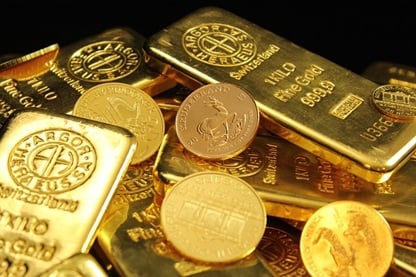
Every Malaysia gold rate comes in two forms: a buying price and a selling price. The difference between them is the spread.
The selling price is what a buyer pays to purchase gold from a dealer or bank. It is higher because it includes the dealer's premium.
The buying price is what a seller receives when selling gold back to a dealer. It is lower because the dealer needs room to resell at a profit.
|
Transaction |
Price Used |
Direction |
|
Buying gold |
Selling price (higher) |
Money out |
|
Selling gold |
Buying price (lower) |
Money in |
The spread between the two covers the dealer's costs and profit margin. A narrower spread generally benefits the investor, but it should not be the only factor in choosing a dealer.
When checking the Malaysia gold rate, always confirm which price is being displayed. A rate that looks attractive may be the buying price, which is not the price an investor pays to purchase.
Why Gold Is Quoted Per Gram and Per Ounce
Gold is quoted in different units depending on the source and context.
International markets quote gold in US dollars per troy ounce. One troy ounce equals approximately 31.1 grams. This is the standard for institutional trading and global spot prices.
Malaysian retail markets typically quote gold in ringgit per gram. This is more practical for local buyers who purchase bars and coins measured in grams.
Some dealers quote both. A 100-gram bar may be priced per gram, while a 1-kilogram bar may be quoted as a total price.
When comparing rates across sources, investors should confirm they are looking at the same unit. Comparing a per-ounce price to a per-gram price without converting leads to confusion.
To roughly convert a per-ounce USD price to a per-gram MYR price:
(Spot price in USD × USD/MYR rate) ÷ 31.1
This provides an approximate base before dealer premiums are added.
Live, Daily and Delayed Gold Rates Compared
Not all gold rates update at the same speed. The frequency affects how useful the rate is for different purposes.
|
Rate Type |
Update Frequency |
Best For |
|
Live rate |
Continuously during market hours |
Active traders and same-day buyers |
|
Daily rate |
Set once per day, typically in the morning |
General reference and price tracking |
|
Delayed rate |
15–30 minutes behind real-time |
Casual monitoring |
Live rates are available on trading platforms and some dealer websites. They reflect the current spot price and move with every tick in the market.
Daily rates are used by some banks and jewellery associations. They provide a stable reference for the day but will not capture intraday movements.
Delayed rates appear on financial portals that do not pay for real-time data feeds. They are sufficient for trend tracking but not for timing a same-day purchase.
An investor planning to buy physical gold from a dealer should check the live or frequently updated rate on the dealer's own website, as that is the rate the transaction will be based on.
How the Ringgit Exchange Rate Changes the Malaysia Gold Rate
The ringgit plays an equal role to the spot price in determining the local gold rate.
Gold trades globally in US dollars. When the ringgit weakens against the dollar, more ringgit are needed to buy the same amount of gold. The Malaysia gold rate rises even if the international spot price is unchanged.
When the ringgit strengthens, the opposite occurs. The local rate may fall even if the dollar spot price holds steady.
Example:
|
Scenario |
Spot Price (USD) |
USD/MYR |
Local Rate (per ounce) |
|
Base |
$2,500 |
4.50 |
RM11,250 |
|
Ringgit weakens |
$2,500 |
4.70 |
RM11,750 |
|
Ringgit strengthens |
$2,500 |
4.30 |
RM10,750 |
The spot price did not move in either scenario, but the local rate changed by RM500 per ounce purely due to the exchange rate.
For Malaysian investors, checking both the gold spot price and the USD/MYR rate provides a fuller picture of what is driving the local rate.
Why Different Dealers Show Different Gold Prices
Checking three different sources may produce three slightly different rates. This is normal.
Timing differences. A dealer updating at one time may show a different rate from a bank that set its daily rate at another time.
Premium differences. Each dealer adds their own margin. A dealer with lower overheads may offer a more competitive rate than one with a prime retail location.
Product differences. The premium structure differs by bar size. Larger bars carry lower premiums per gram.
Spread differences. Some sources display the selling price. Others display a mid-point or the buying price. Confirming which price is being shown avoids confusion.
Small differences are normal. A large difference warrants further investigation.
How to Use the Malaysia Gold Rate When Buying or Selling
Compare before buying. Check the selling price at two or three dealers before making a physical purchase. Small differences are normal. A large difference warrants further investigation.
Track over time. Rather than checking the rate daily, track it weekly or monthly to understand local price patterns. This provides context that a single snapshot cannot.
Set alerts. Many financial platforms and dealer websites allow users to set price alerts. An alert triggers when the rate reaches a specified level, removing the need for constant monitoring.
Check the ringgit. When the local rate seems unexpectedly high or low, check the USD/MYR rate. Often, the explanation lies in currency movement rather than gold movement.
Final Thought
The Malaysia gold rate is a practical tool, not an abstract benchmark. It is the number that determines what a buyer pays and what a seller receives. Knowing where to find it, how to read it, and why it varies between sources helps investors make more informed decisions.
Check multiple sources. Confirm whether the displayed rate is the buy or sell price. Be aware of the unit — per gram or per ounce. And remember that the ringgit exchange rate matters as much as the spot price in determining what appears on the screen.
The investor who understands these fundamentals is better equipped than one who simply glances at a single number and hopes it is fair.
FAQs
Q: How is the gold rate determined when the international market is closed?
A: During weekends or holidays when the spot market is closed, local dealers may display the last available closing rate or pause updates until trading resumes.
Q: What is the difference between the gold rate for a cast bar and a minted bar?
A: The underlying gold value is the same, but minted bars often carry a slightly higher premium due to additional manufacturing and packaging costs, which affects the final retail rate.
Q: Can foreign exchange platforms be used to track the Malaysia gold rate?
A: Yes. Trading platforms that display XAU/USD provide the international spot price. To estimate the local rate, investors need to apply the USD/MYR exchange rate and add an approximate dealer premium.
Q: How do international gold rate benchmarks like the LBMA Gold Price affect local rates?
A: The LBMA Gold Price serves as a reference for large institutional transactions. Local dealers use the broader spot market — which the LBMA benchmark influences — as the starting point for calculating their retail rates.
Q: Why might a dealer's gold rate differ between their website and their physical store?
A: Some dealers update online rates more frequently than in-store displays. Others may offer slightly different rates for online versus walk-in transactions due to differences in overhead costs.
[Disclaimer] The articles above are purely personal opinions and are not intended to be investment advice. Only for the purpose of mutual learning and sharing. There is no express or implied warranty regarding the accuracy or completeness of the above-mentioned information. Anyone who relies on the information, ideas, or data contained in this article does so entirely at their own risk.
Next post: What Is Public Gold Price and How Is It Determined
Previous post: 📊 Gold / FX / Oil / AI Stocks Weekly Outlook