
Forex Currency Malaysia: What It Is and How It Works
Categories: Forex Trading
Tags: forex currency malaysia
Publish date: 2026-8-14
Forex Currency Malaysia: How the Market Works
Every time the Malaysian ringgit is exchanged for a foreign currency, a small part of the global forex market comes into play. Whether the transaction involves a business paying an overseas supplier, a traveller picking up US dollars before a trip, or a trader buying euros through an online platform, the underlying mechanics are similar. One currency is sold, another is bought, and the price agreed upon reflects a vast web of economic forces, market sentiment, and supply and demand.
For those new to the topic, forex currency Malaysia can seem complex at first glance.
The market is enormous in scale, yet its basic principles are accessible to anyone willing to spend time understanding how it functions. This article walks through how the market operates in Malaysia, who participates, what drives price movements, and how individuals access it.
How Forex Trading Works in Malaysia
Unlike a stock exchange with a physical trading floor or a single electronic hub, the forex market has no fixed address. It runs through a global network of banks, brokers, and financial institutions that trade currencies electronically.
Trading moves across time zones, starting in Asia on Monday morning and closing in North America on Saturday morning Malaysian time. A rate quoted at 9 a.m. in Kuala Lumpur may differ noticeably by the time London opens or New York enters the afternoon. For anyone watching currency prices, the session in which they are active can influence the spreads they see and the volatility they experience.
The sheer volume of daily trading, measured in trillions of dollars, means that major currency pairs tend to be highly liquid during peak hours when using reputable forex brokers in Malaysia.
Smaller or less commonly traded pairs, including those involving the ringgit, can behave differently. Liquidity may thin out during certain windows, and price moves can become sharper as a result.
Who Trades Currencies and Why
The reasons people and institutions trade currencies vary widely.
Central Banks and Institutions
At the top of the structure are central banks, which may buy or sell currencies to manage reserves or influence monetary conditions. Large financial institutions also trade among themselves in what is often called the interbank market. The prices set at this level tend to filter down to smaller players.
Corporations and Businesses
Between these large institutions and individual traders sit commercial banks, multinational corporations, fund managers, and small businesses.
An exporter in Johor receiving payment in Singapore dollars needs to convert that income into ringgit. An importer in Selangor paying a Chinese supplier in renminbi faces the opposite requirement. Both are participating in the forex market out of practical necessity rather than speculative interest.
Retail Traders
At the other end of the spectrum is the individual trader speculating on whether the euro will strengthen against the dollar over the course of a few hours.
Retail traders typically engage with currencies to profit from price changes. They do not need the currency they buy for any physical purpose. Their interest lies entirely in whether the price rises or falls after they enter a position.
This speculative activity accounts for a small portion of total global volume but represents the most visible form of forex currency trading for many Malaysians.
The presence of so many different participants with different goals contributes to the market's depth. A transaction that begins with a corporate hedging need may be offset by a speculator taking the opposite side. Neither party knows the other, but the trade clears regardless.
How Currency Pairs Are Structured
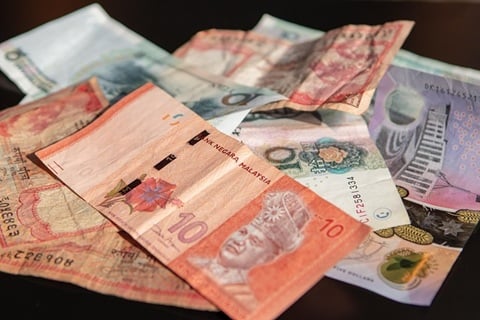
Every forex trade involves two currencies moving in opposite directions. When a trader buys GBP/USD, they are buying British pounds and simultaneously selling US dollars. When they sell USD/JPY, they are selling dollars and buying Japanese yen.
The first currency in the pair is the base currency. The second is the quote currency. The number shown on screen says how much of the quote currency is needed to buy one unit of the base. If GBP/USD is at 1.27, one pound costs 1.27 dollars. A move higher means the pound has strengthened. A move lower means it has weakened.
Currency pairs are commonly sorted into three broad groups.
- Major pairs pair the US dollar with another heavily traded currency, such as the euro, yen, or British pound. These are known for tight spreads and deep liquidity.
- Cross pairs match two non-dollar currencies, like EUR/GBP or AUD/JPY.
- Exotic pairs combine a major currency with one from a smaller economy. USD/MYR and EUR/MYR fall into this category.
Exotic pairs often come with wider spreads and less predictable price action. The market for ringgit pairs is thinner than for EUR/USD or USD/JPY, partly because ringgit transactions are governed by Malaysia's Foreign Exchange Administration framework, which sets conditions for certain cross-border uses.
Traders who watch ringgit pairs closely tend to pay extra attention to local economic announcements and any signals from Bank Negara Malaysia. These can have a more pronounced effect than they might on a deeper market.
What Affects the Ringgit Exchange Rate?

No single factor dictates where a currency pair heads next. Instead, prices tend to respond to a shifting mix of economic data, interest rate expectations, and broader market sentiment.
- Interest rates: Currencies from countries with higher rates often attract capital seeking better returns, which can push up their value. When the US Federal Reserve signals rate changes, the dollar frequently moves across the board. Similarly, a policy shift by Bank Negara Malaysia can influence ringgit demand.
- Economic data: Inflation reports, employment figures, manufacturing data, and trade statistics all offer clues about the health of an economy. A stronger-than-expected number can lift a currency. A weaker print can weigh on it. The market often reacts not to the data itself but to how it compares against expectations.
- Geopolitical events: During periods of uncertainty, money may flow toward currencies perceived as stable, such as the US dollar or Swiss franc. Currencies from emerging economies, the ringgit included, can come under pressure during these episodes even when domestic conditions appear stable.
- Commodity prices: For Malaysia specifically, palm oil, crude oil, and liquefied natural gas all feed into export earnings. A sustained rise in commodity prices can increase ringgit demand. A prolonged slump can have the opposite effect.
Traders who spend time observing the market often learn to track several of these signals at once. Rarely does a single piece of data tell the whole story. Most meaningful price moves are the product of overlapping factors reinforcing or offsetting one another.
How to Start Forex Trading in Malaysia
A Malaysian resident looking to trade forex currency pairs typically does so through an online platform. The process is generally straightforward. After registering an account and submitting identification documents, the individual deposits funds and gains access to live price quotes.
Placing a trade involves selecting a pair, deciding the trade size, and choosing whether to buy or sell. Buying means going long, with the expectation that the base currency will rise. Selling means going short, anticipating a decline.
Modern platforms allow trades to be opened and closed within seconds, though the thinking behind each decision can take considerably longer.
Most retail forex trading is done through derivative instruments such as contracts for difference (CFDs) . These products allow traders to speculate on price movements without physically holding any currency. Any profit or loss is calculated from the difference between the entry price and the exit price.
Leverage is a standard feature. It gives a trader the ability to control a larger position than their deposit alone would allow.
A modest deposit can translate into a much larger market exposure, which magnifies both gains and losses. A small adverse move can wipe out a deposit quickly, just as a small favourable move can generate a noticeable return. Many traders use stop-loss orders in an effort to manage this exposure, though these tools do not eliminate risk and may not always fill at the exact level specified during volatile conditions.
The regulatory environment is another layer worth understanding. Some platforms are licensed in Malaysia, while others are regulated in foreign jurisdictions. Different regulators impose different requirements, and the level of client fund protection can vary. Individuals should check the regulatory status and applicable rules before using any platform. To understand how leverage, spreads, and order execution work in practice, you can open a FXCM demo account and experience live market conditions without any deposit.
Bank Negara Malaysia and Forex Rules
The ringgit is less heavily traded than major global currencies, but it remains an important currency in Southeast Asia.
Among the more commonly watched pairs involving the ringgit are USD/MYR, driven by Malaysia's trade with the United States and the dollar's role as the world's primary reserve currency, and SGD/MYR, reflecting deep economic ties with Singapore.
Bank Negara manages the ringgit under a managed float. Market forces determine the exchange rate for the most part, but the central bank reserves the ability to intervene if price swings become excessive. For traders, this means that while the ringgit generally moves freely, occasional periods of central bank activity can alter market dynamics.
The ringgit is governed by Malaysia's Foreign Exchange Administration framework, which sets conditions for certain ringgit and foreign-currency transactions. These rules outline how residents and non-residents may convert ringgit and for what purposes. Understanding the basics of this framework can help individuals navigate the market with greater clarity.
What Forex Traders Should Keep in Mind
Spending time in the forex market tends to teach lessons that no article can fully capture. That said, several habits and observations have become common among those who approach the market seriously.
- Small positions leave room to learn: Starting with modest trade sizes allows a person to experience real market conditions without exposing themselves to outsized losses. Many traders stay small for longer than they initially expect.
- The spread is a cost worth knowing: Every trade begins slightly in the red because of the spread between the buy and sell price. Understanding how this cost varies by pair and by session can help shape trade selection.
- News can surprise the market: Even widely anticipated announcements can produce unexpected price reactions. How the market interprets a piece of data matters more than the data itself.
- A journal can reveal patterns: Recording trades, including the reason for entering and the emotional state at the time, often uncovers tendencies that live trading conceals. Reviewing these records can be more instructive than reading market commentary.
- No two traders approach the market the same way: Risk tolerance, time availability, and personal temperament differ widely. What works for one person may not suit another, and finding a rhythm takes time.
Final Thoughts
Forex currency Malaysia is best understood as part of a larger global market that connects banks, institutions, businesses, and individual traders. While the opportunities can be appealing, the risks are real, so it helps to start with clear expectations, a basic understanding of the rules, and a cautious approach to leverage and position size.
FAQs
Q: What is forex currency Malaysia?
A: It refers to the foreign exchange market as accessed by individuals and institutions in the country, covering everything from physical currency exchange to online trading of currency pairs.
Q: Is forex trading legal in Malaysia?
A: Yes, through licensed banks, money changers, and regulated platforms. It is advisable to confirm the regulatory status of any platform before opening an account.
Q: Which currency pairs are most commonly traded by Malaysians?
A: Many traders focus on major pairs like EUR/USD and GBP/USD. Ringgit pairs like USD/MYR and SGD/MYR are also watched, though they tend to have wider spreads.
Q: Do I need a large amount of money to start?
A: Minimum deposit requirements vary between platforms. Some allow accounts to be opened with relatively small amounts, though trade size and leverage settings affect how far a deposit can stretch.
Q: How does leverage work in forex trading?
A: Leverage allows a trader to control a position larger than their deposit. It amplifies both potential profits and potential losses, making risk management a central part of trading.
[Disclaimer] The articles above are purely personal opinions and are not intended to be investment advice. Only for the purpose of mutual learning and sharing. There is no express or implied warranty regarding the accuracy or completeness of the above-mentioned information. Anyone who relies on the information, ideas, or data contained in this article does so entirely at their own risk.